


Gelid Stella Infinity Review
Introduction
Gelid just updated their Stella fans. Now they come with an infinity mirror in the center and additional airflow notches on the wings. Let's take a closer look at them and if their performance was improved!
Positive
- PWM
- Good RGB implementation
Neutral
- 3-pin ARGB Splitter
Negative
- Could be Quieter
- Could perform a bit better
What's in the Box?
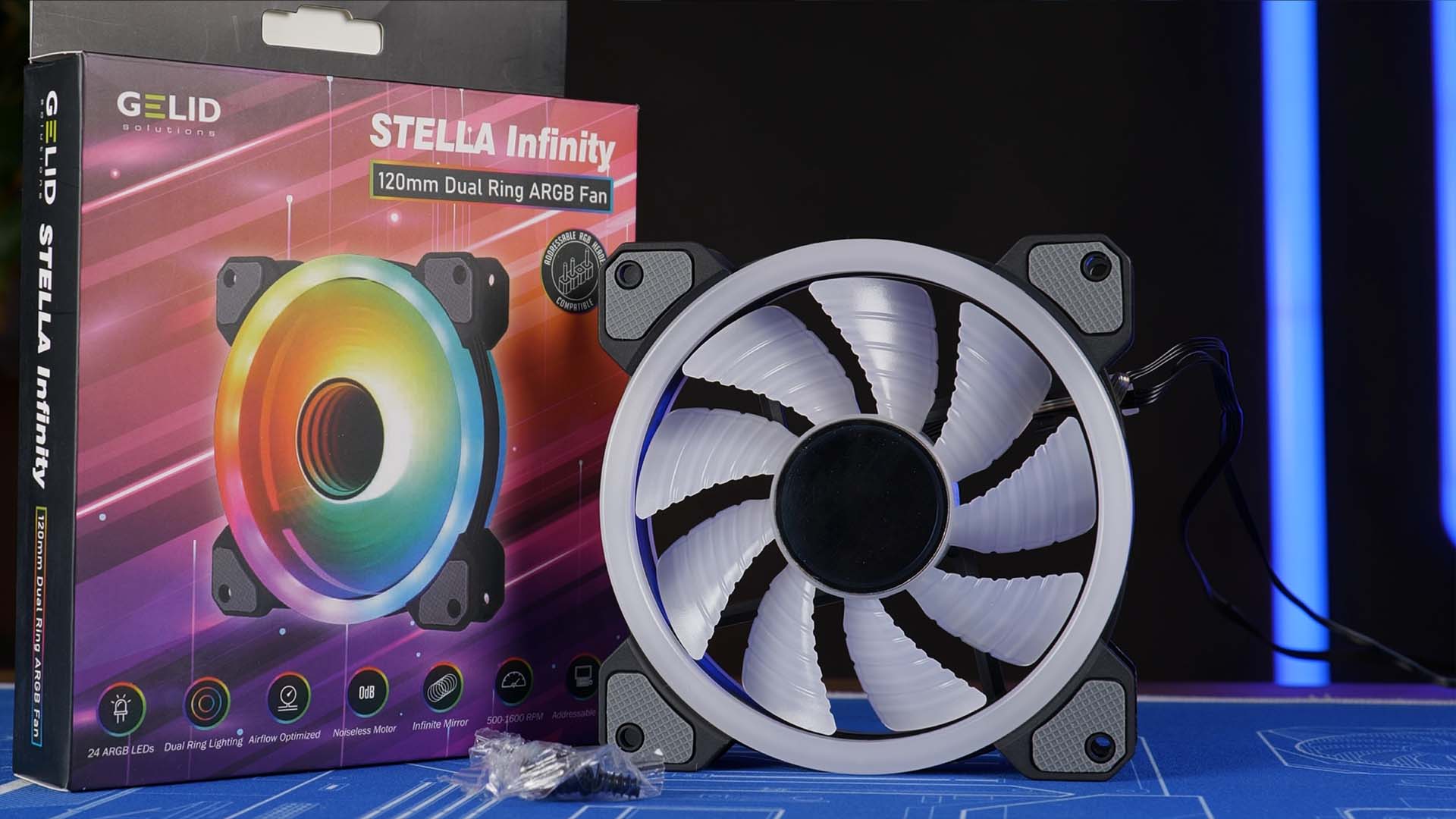
Similar to their Gelid Stella fans, the new Infinity Sub-Version comes inside the classical Gelid style package. Covered in a bit of imagery and specs, we will find the following items inside:
- Gelid Stella Infinity Fan
- 1x Fan Screw Set
Please note that there are two- individual layers of protective film on top of the central "infinity" mirror. The first one which is blue can be removed quite easily while the second transparent one needs a little scraping off.
Down below we summarized the spec sheet:
| Name | Gelid Stella Infinity |
| Size | 120x120x25mm |
| Speed | up to 1600RPM |
| Airflow | up to 70CFM |
| Static Pressure | up to 1.3mm/H2O |
| Noise | < 24dbA |
| Connection | 4-Pin PWM |
| Cable Length | 500mm |
| Bearing | Hydro Dynamic |
| Motor | - unknown - |
| RGB | - none - |
Installation
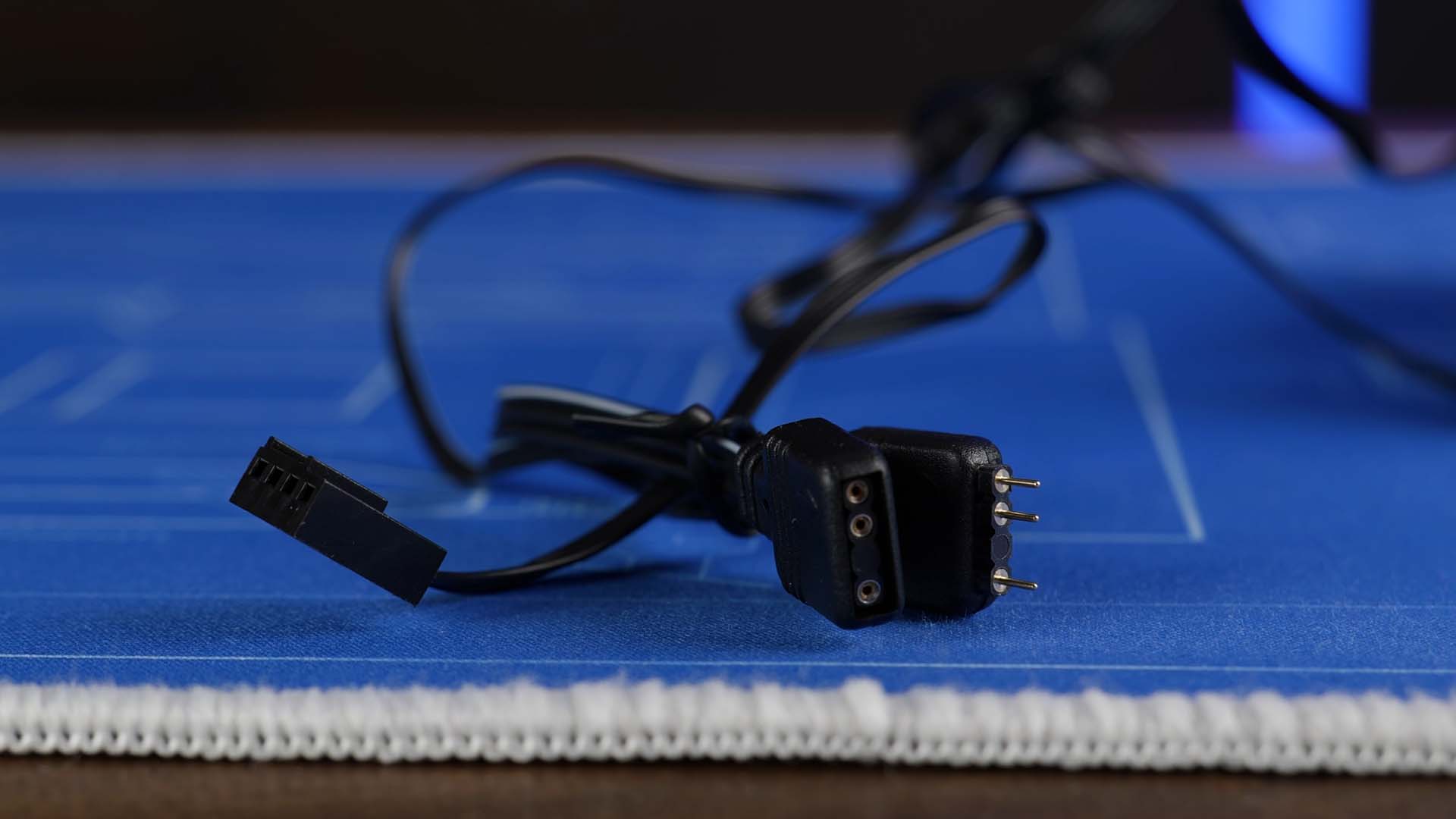
Installation-wise there is absolutely no difference to the older Stella Fans. Position where they are supposed to go, screw in- done.
To get them running we have a 50cm long 4-Pin PWM cable as well as a 50cm long 3-pin ARGB cable for lighting including an additional splitter at the end of the cable.
Appearance
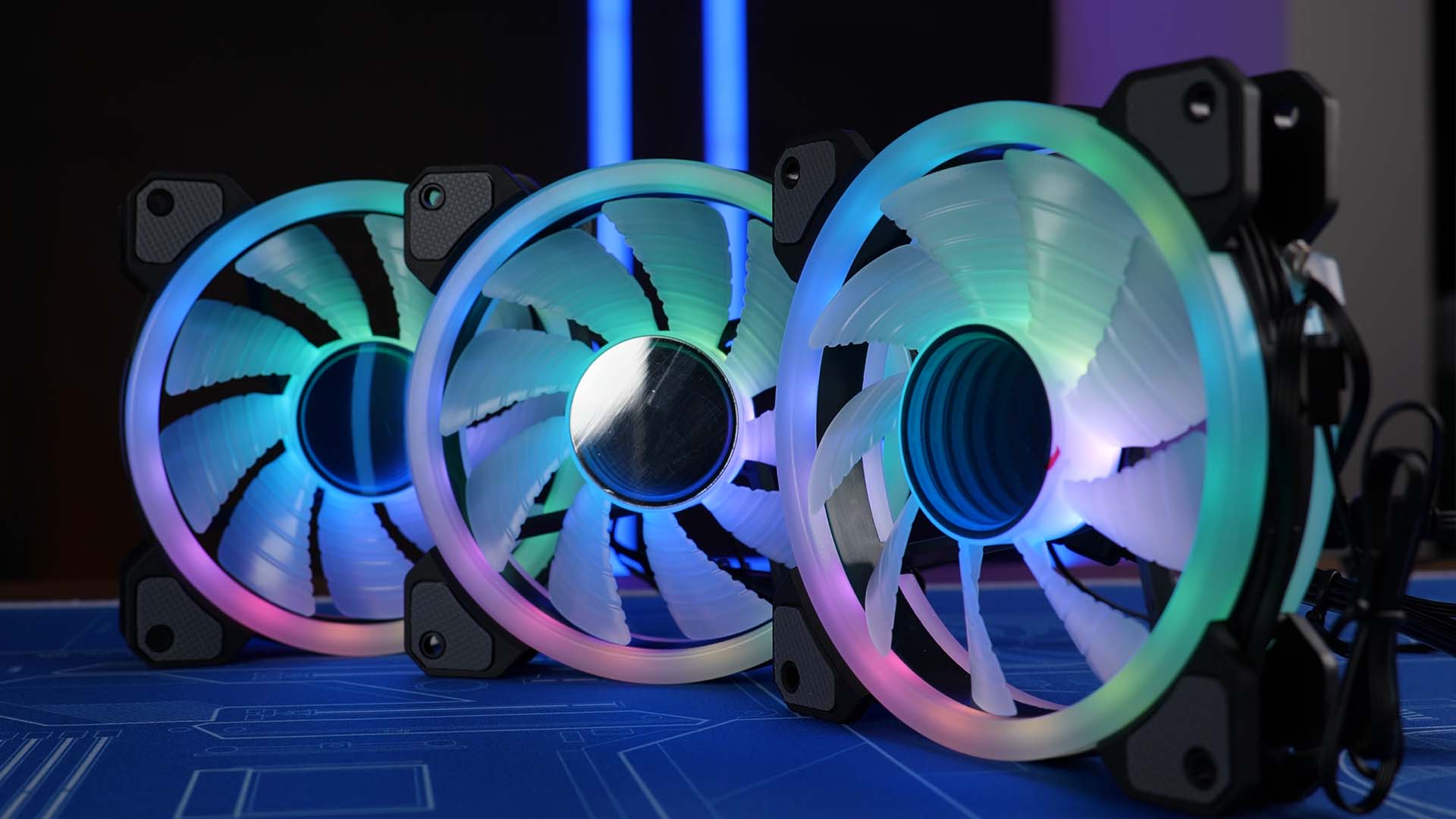
Design-wise, it might seem hard to keep the Infinity and non-Infinity versions apart. But there are differences.
The main difference and selling point would be the infinity mirror in the center of the fan. By using a mirror-like foil and a couple of LEDs Gelid created gave the fan an Infinity mirror in the center.
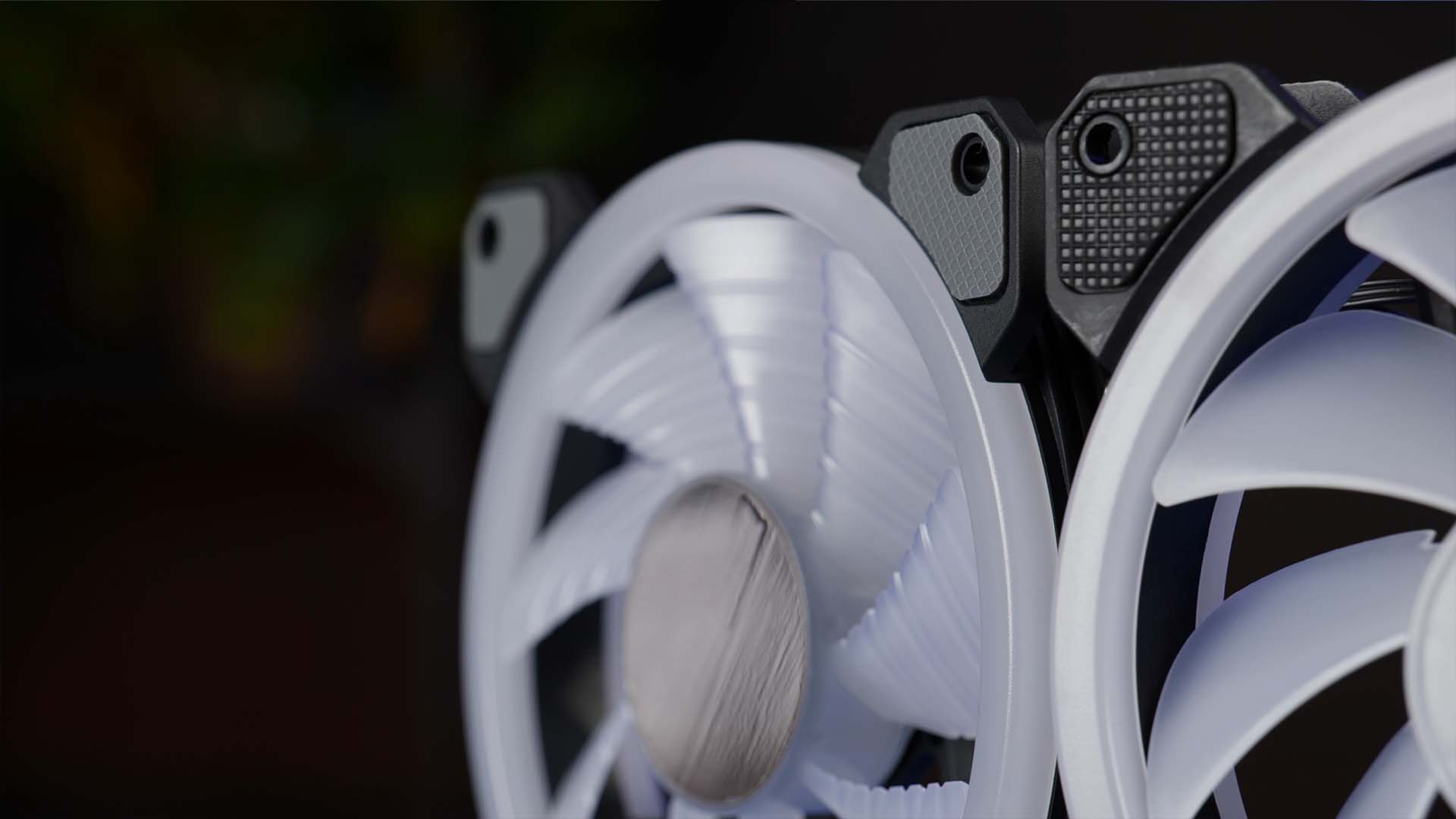
Other than the lightning show, the wings of the fans got a little refreshed Now we got some notches at the end of the fan. Although it would be hard to single out and measure, those types of notches are known to marginally improve a fan's airflow characteristics.
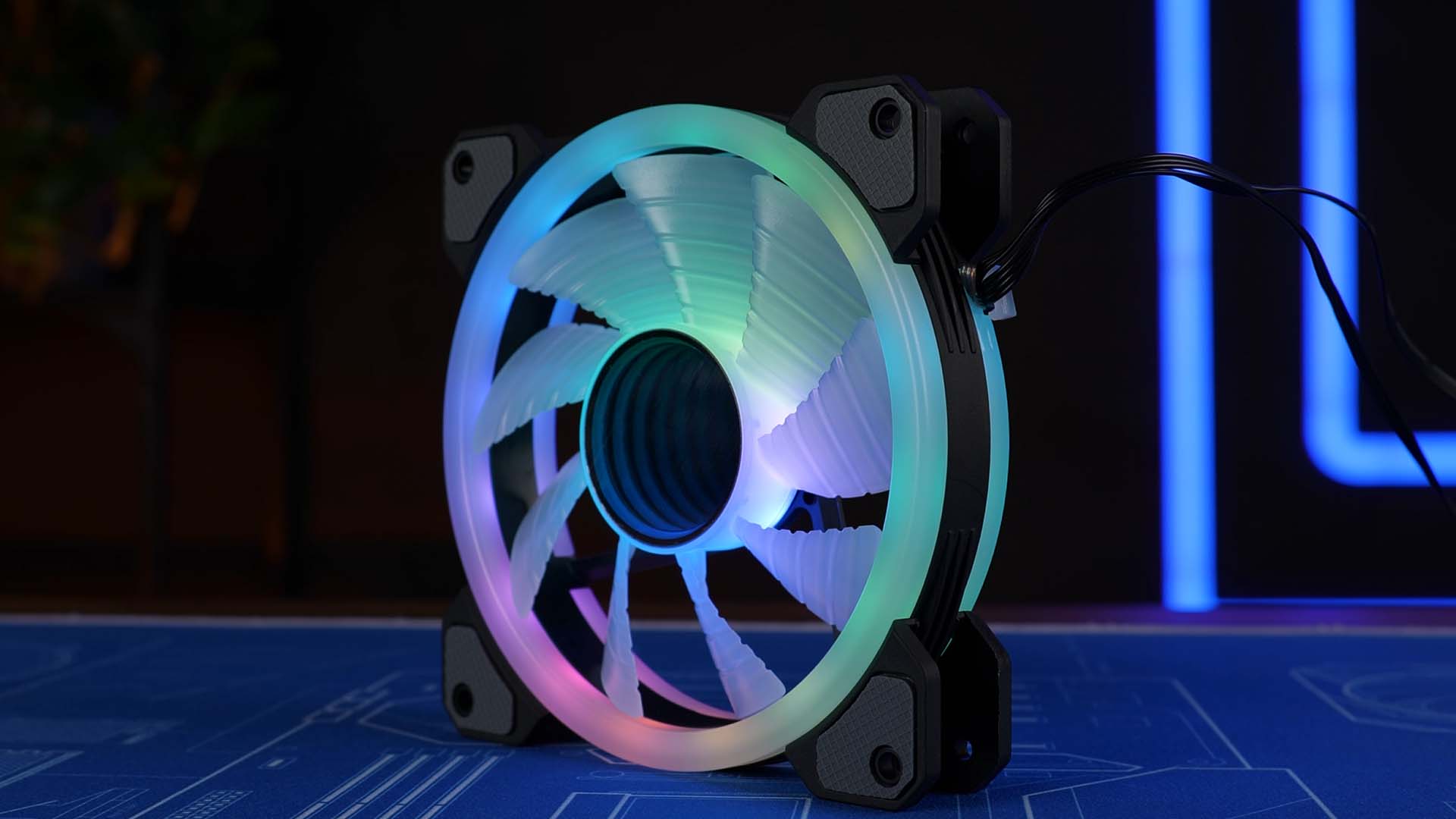
Ignoring the notches and additional ring of light power, the rest of the fan is close to similar to what we had with the previous Stella's. A bigger ARGB ring around the outer border and another few LEDs inside the central hub illuminate the wings themselves.
All in all, the RGB implementation of the new Stella fans is just as good as it was on the original ones.
Benchmark
We benchmarked the new Infinity sub-version on top of our usual benchmark machine.
 copy.jpg)
Whilst letting the Fans spin at their max 1600RPM, the Stella Infinities managed to keep the CPU at 57.2°C. This positions it very slightly above the original ones, but still quite low on our list overall.
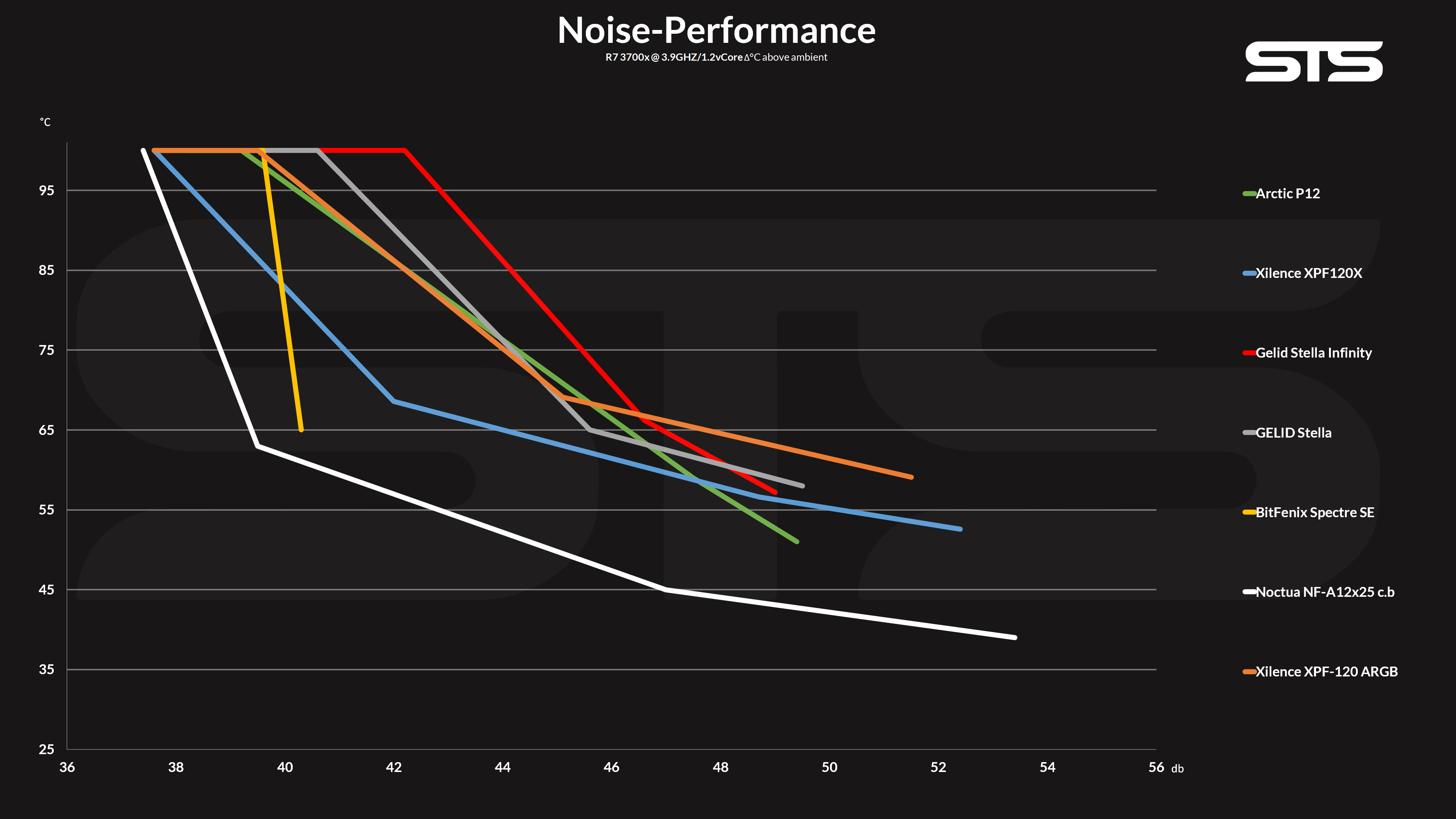
Creating a noise-to-performance graph by slowly lowering the fan's speed by 10% decrements revealed that it was only at the very top-speed that the new Infinities outperformed the original ones. Once the speed was lowered by just 10%, the noise-to-performance ratio of the original ones because slightly better leaving the new update in the dust.
To make things worse, due to their slightly worse noise-to-performance ratio, the new Stella infinity did not manage to outperform the Arctic P12 in any situation.
Conclusion
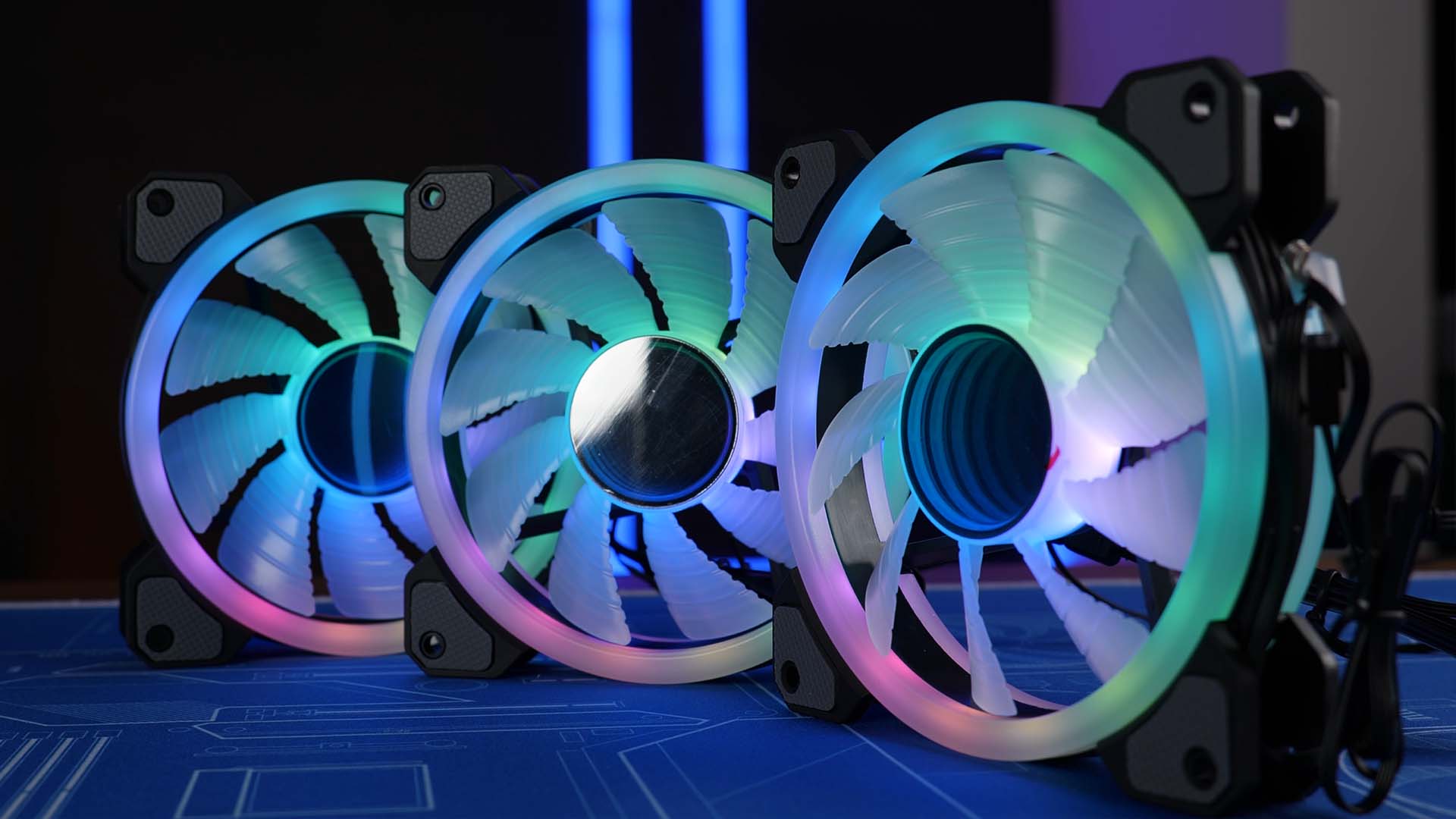
Although you could consider it an optical "upgrade", performance-wise, there is surely no reason to go for the Inifnity sub-version compared to the original ones.
However, very similar to the conclusion we came to in the Stella review, there are not really any fans available with this amount of RGB whilst costing less than 10€.
Additionally, although not very high on the list, there are no ARGB Fans we tested until now which were able to keep up with Stella Infinity's performance at this price segment.
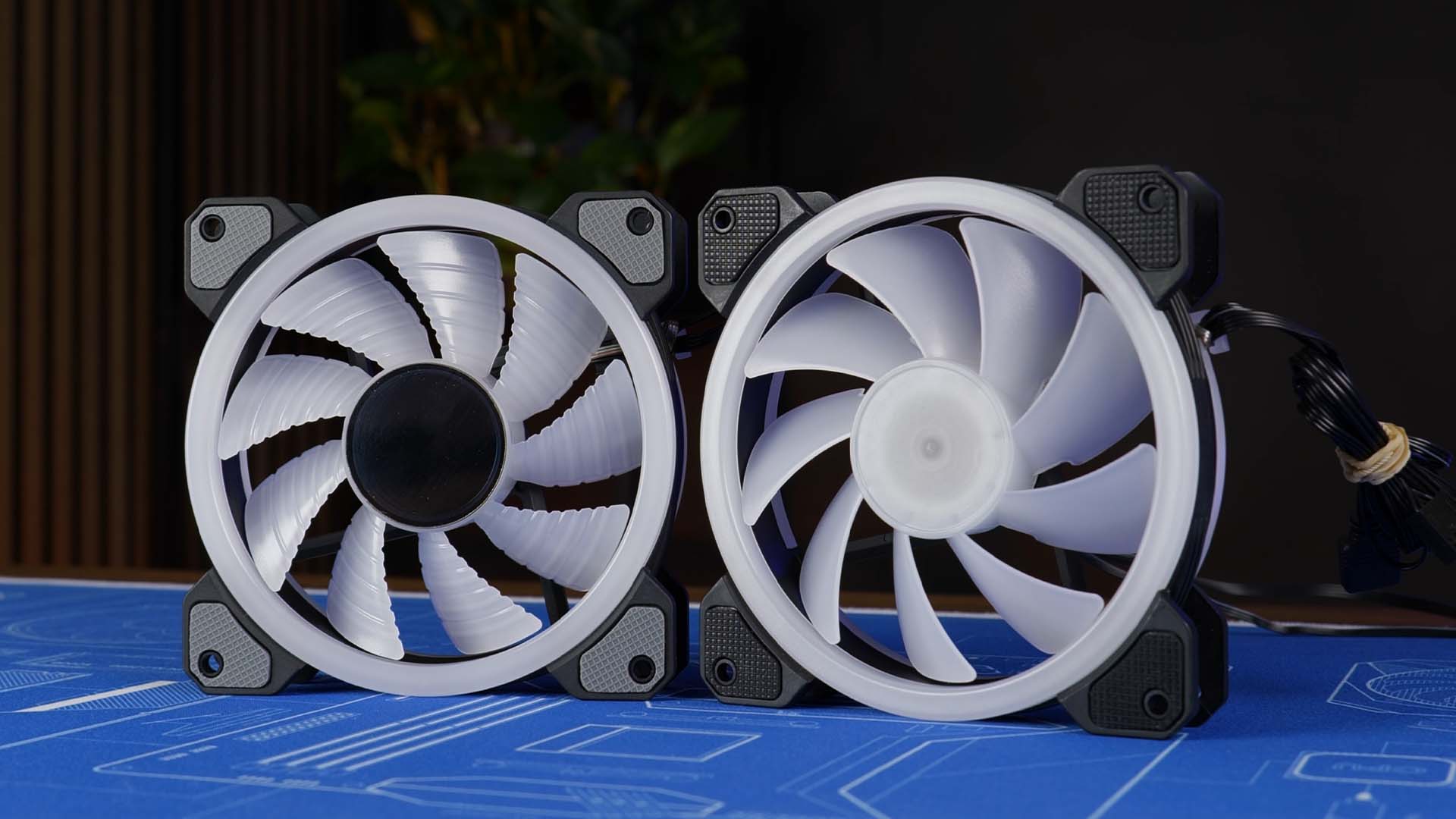
Overall, it looks like Gelid's Stella and Stella infinity are still at a very good price-to-performance position. And due to this reason, we do recommend them for the budget-oriented buyer whose focus lies on the ARGB show you'll get with Stella Infinities. But do keep in mind that they do perform slightly worse in Noise-to-performance overall and that a lot more performance is possible by marginally increasing the budget.

Noctua NH-U12A Chromax Black Review
After taking a look at Noctuas NF-A12x25 Fans, we had no doubt that their NH-U12A Air Cooler using the same Fans would be jus
Read More
Cooler Master Mobius 120 OC Review
After Cooler Master released the much more powerful Mobius 120P, its time for another upgrade in form of a Cooler Master Mobi
Read More
Cooler Master Mobius 120 Review
Cooler Master has released a variety of high-performance fans over the years. Now they came out with another model that promi
Read More
be quiet! Light Wing 120 High Speed Review
After many years of pure blackness, be quiet! finally went RGB. With the newest Light Wing PWM High-Speed, be quiet! tried th
Read More